
Air Canada
Advancing design maturity across practice and strategy
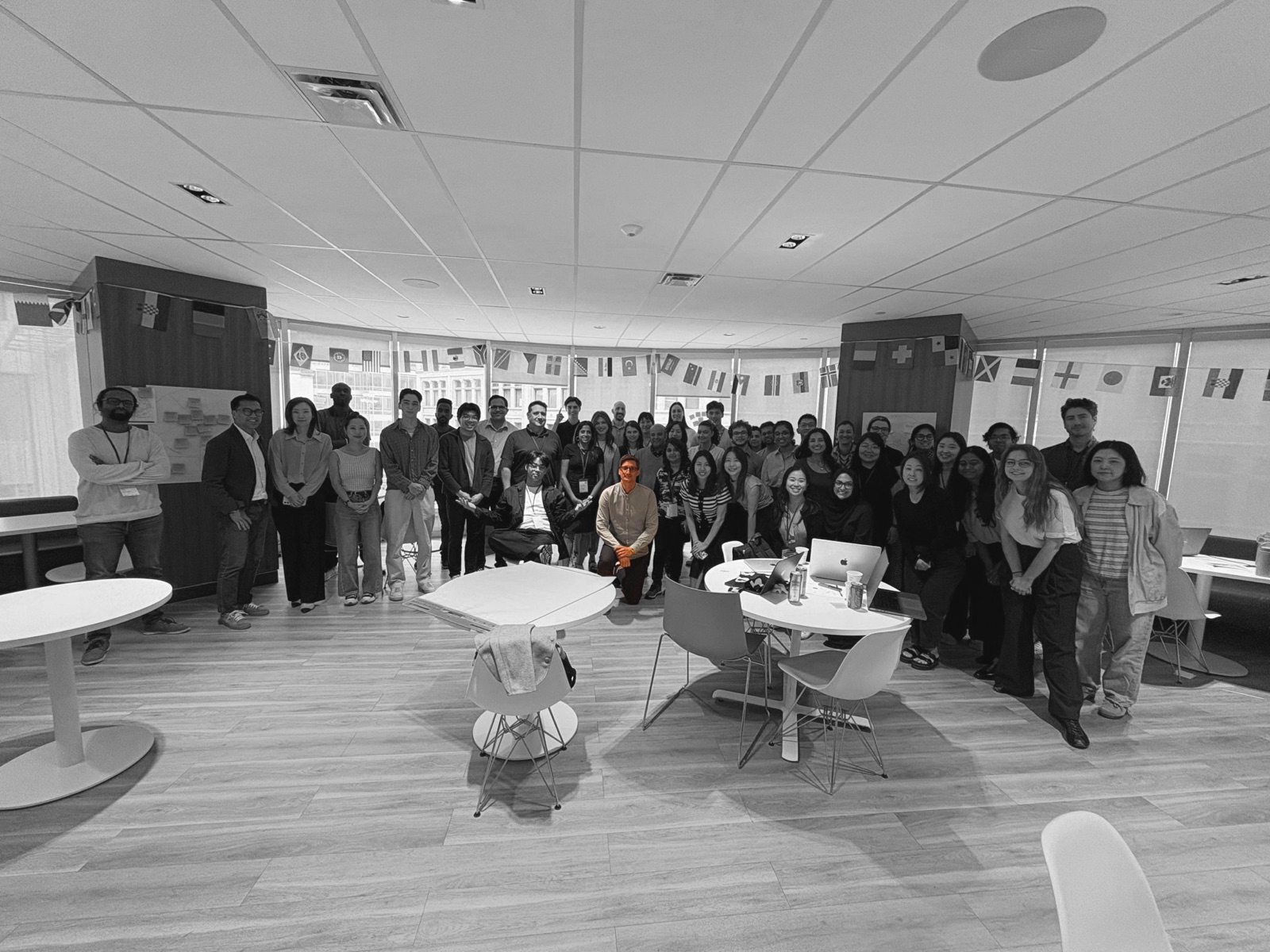
In 2025, I led the product design team for Air Canada's booking experience. Alongside delivery, I launched a coaching program for designers and drove practice-maturity initiatives that together broadened designer skill sets, improved design operations, and created a more strategic design process.
When I first joined the engagement, I quickly uncovered that the booking experience had evolved over the years but lacked scalability in some key aspects of the user interface. Components were inconsistent across the booking, shopping, and management flows, and the Compass Design System, recently introduced, was sitting largely unadopted outside of the homepage. The more I looked at the product, the more it became clear that the product issues were a symptom; what the team needed was professional development and practice maturity to make more thoughtful and innovative decisions in the future. My job as a consultant with Air Canada wasn't going to be simply shipping a better booking experience and then leaving, but to develop an environment where the team could continue shipping better work long after I was gone.
This case study will provide a snapshot of each of the key initiatives I worked on: the design work, coaching, and practice maturity to demonstrate how I helped improve the way product design is done at Air Canada.
Product design
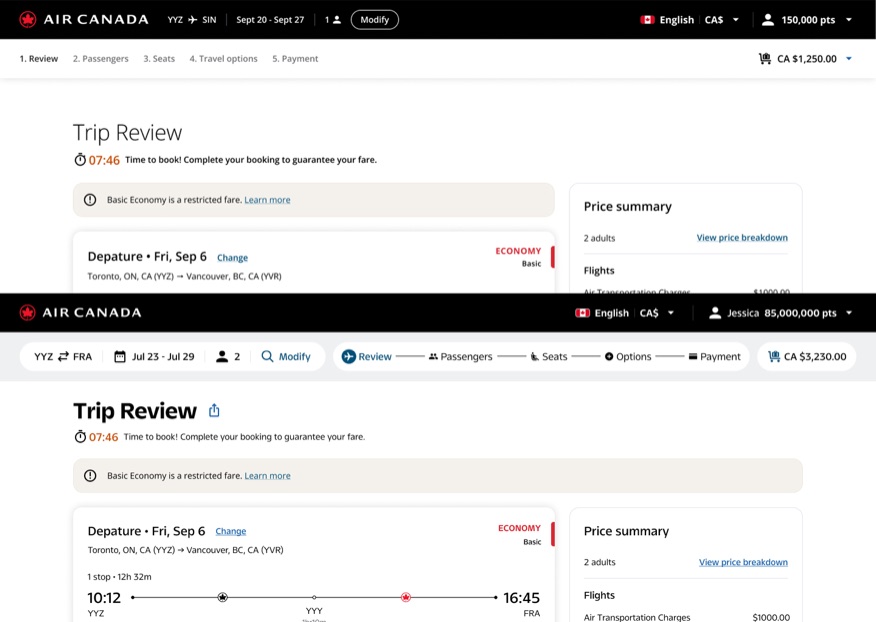
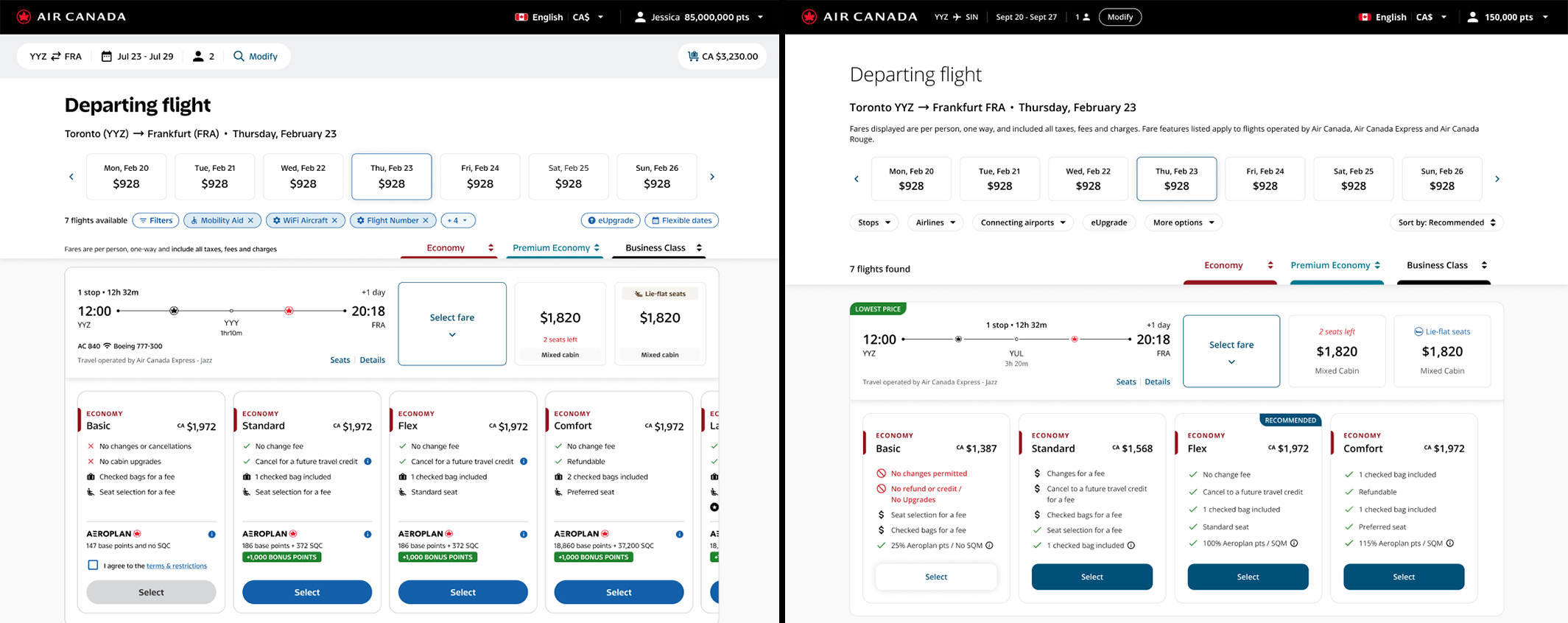
Air Canada's web booking flow had gone through a pretty significant overhaul a year before my arrival; however, as it grew more complex with new requirements from the business, the designs struggled to scale while being consistent. I was also surprised to discover that a thorough design system had been developed but had not yet been adopted within the booking, shopping, and management experiences.
I first began by evaluating the current library of components being used within the designs of these core experiences to identify how they differed from the design system and create a plan of adoption based on design and development priority and feasibility scores.
While evaluating the design system, another issue arose: since the design system was created with a focus on the homepage, which has the luxury of not having to fit as much content into its layout and components, there would need to be some new variants needed for the design system to work for the booking, shopping, and manage experiences, in addition to a few additional components needed specifically for these designs.
This revelation led me to work with the lead designer for the design system to adopt component variants I had developed, in addition to adding brand new components that I created to improve the scalability of our designs and meet the needs of upcoming business requirements.
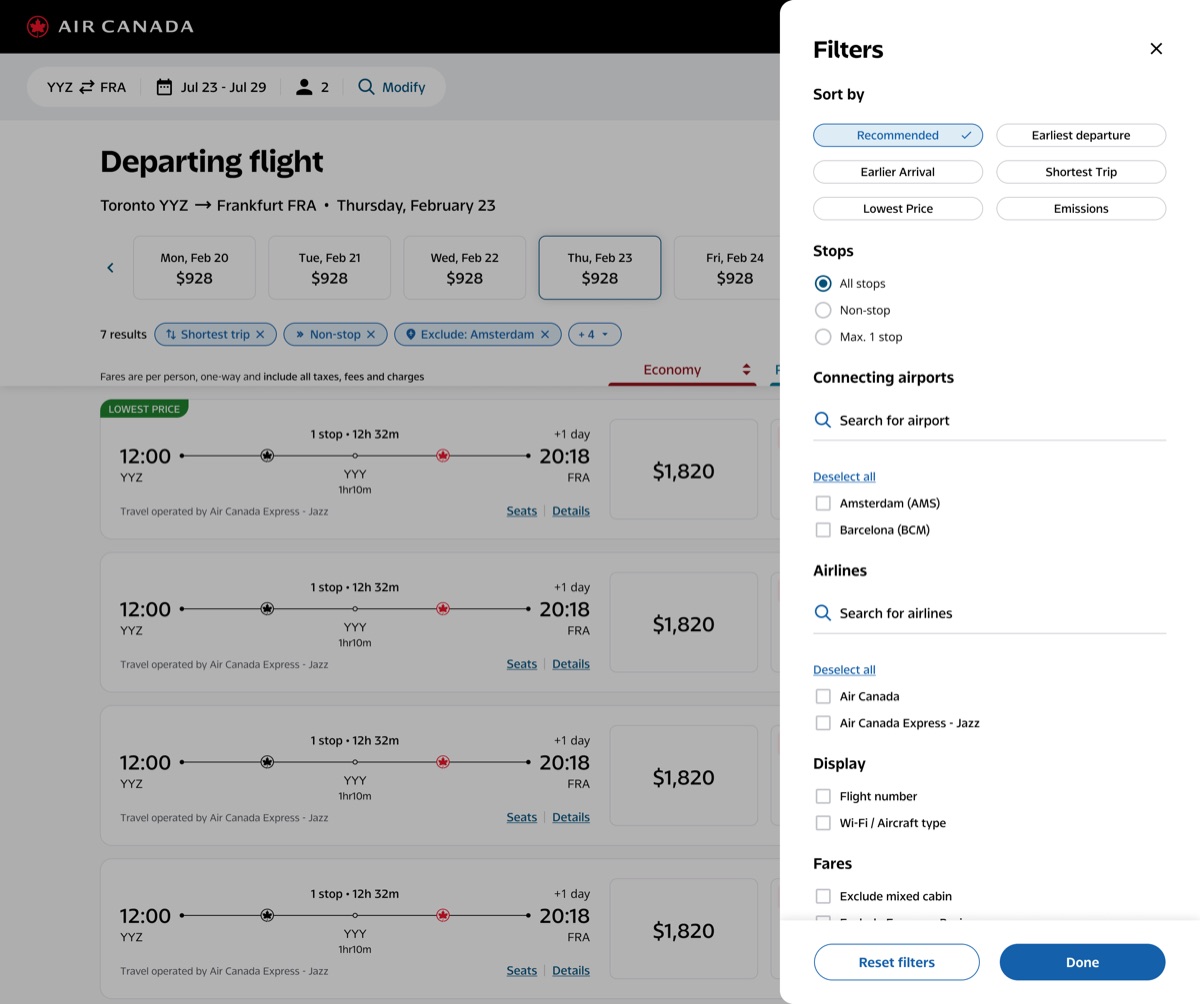
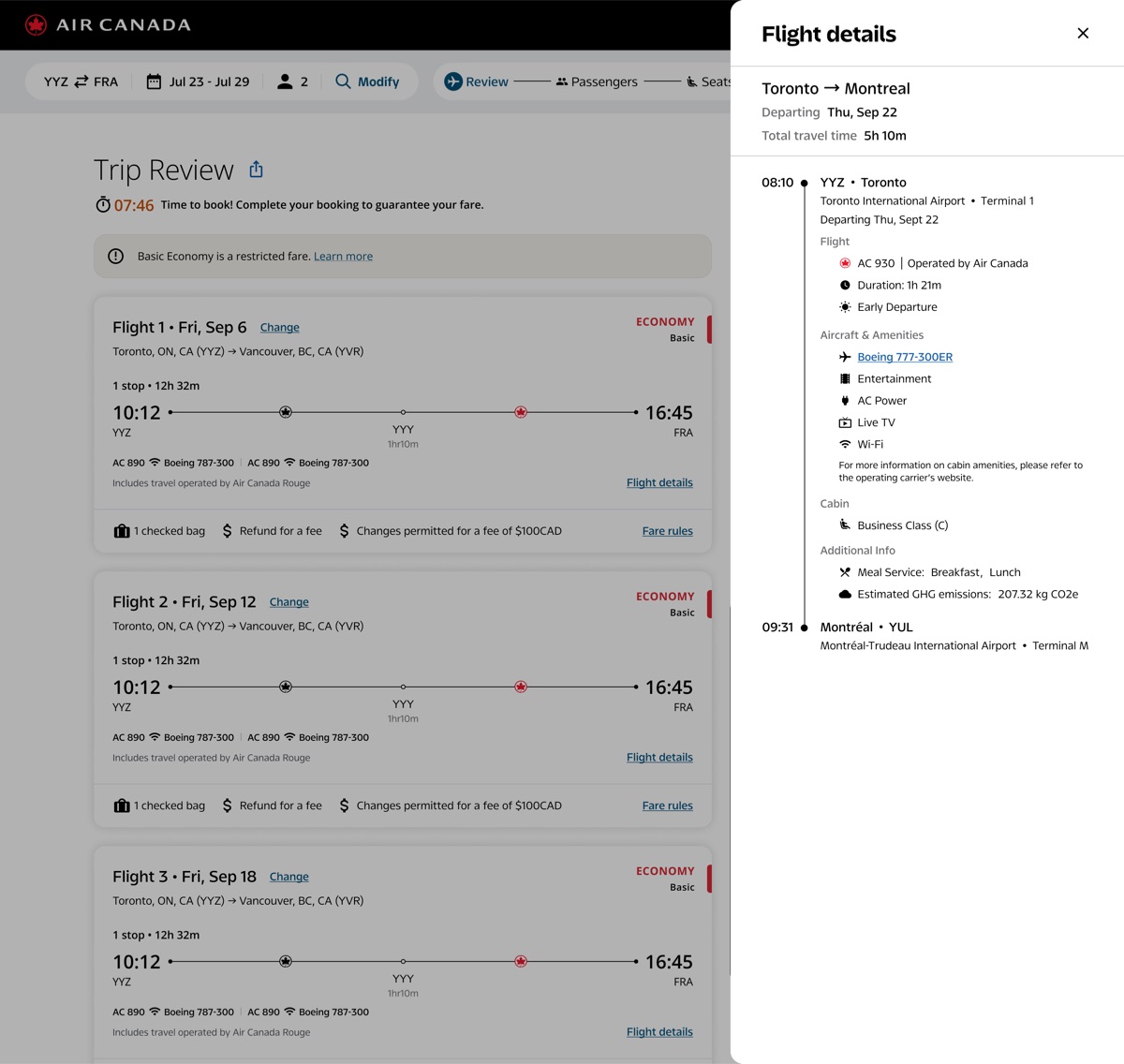
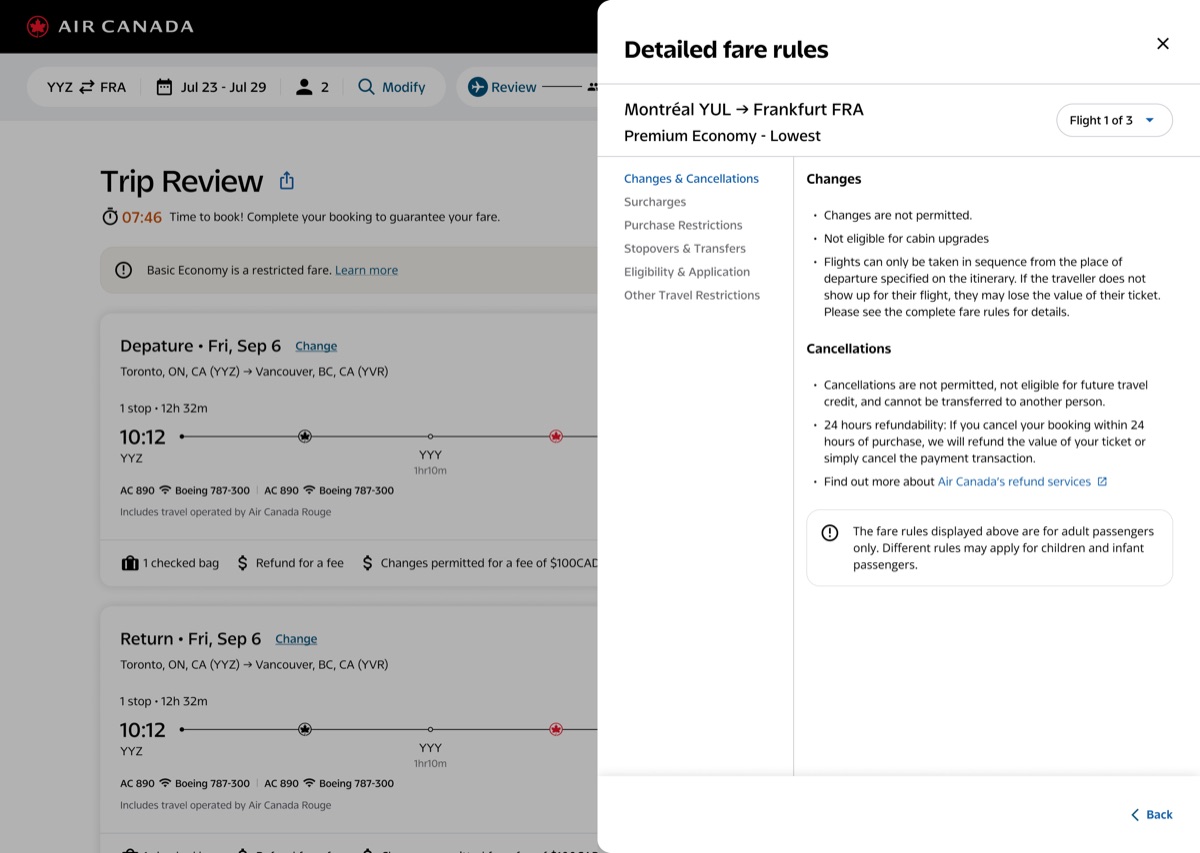
A key example of this was the drawer component family I designed as a scalable alternative for displaying content-heavy information, which up until then was always being displayed within a scrollable modal. Drawers used the full viewport height, adapted cleanly across all breakpoints and gave the team a consistent interaction pattern to apply across multiple designs. The drawer family became a reusable pattern the team could carry across experiences, reducing one-off design decisions and bringing more consistency to the overall experience from search through to payment. It also opened the door to reviewing other components that may be suffering from a similar problem.
Coaching
One of the primary reasons Air Canada asked me to join the engagement was due to my experience as a university professor outside of my work at IBM. They wanted me to join the team not only as a designer but as a design coach to elevate the design team's capabilities. This was a unique and exciting opportunity which led to me developing Air Canada's coaching program.
I began by establishing a bi-weekly coaching cadence with 12 designers, each session tailored to the individual designer's experience, goals, and current project challenges. Coaching covered UX fundamentals, stakeholder communication, design critique, presentation, and strategy. This created a consistent feedback loop that compounded over time.
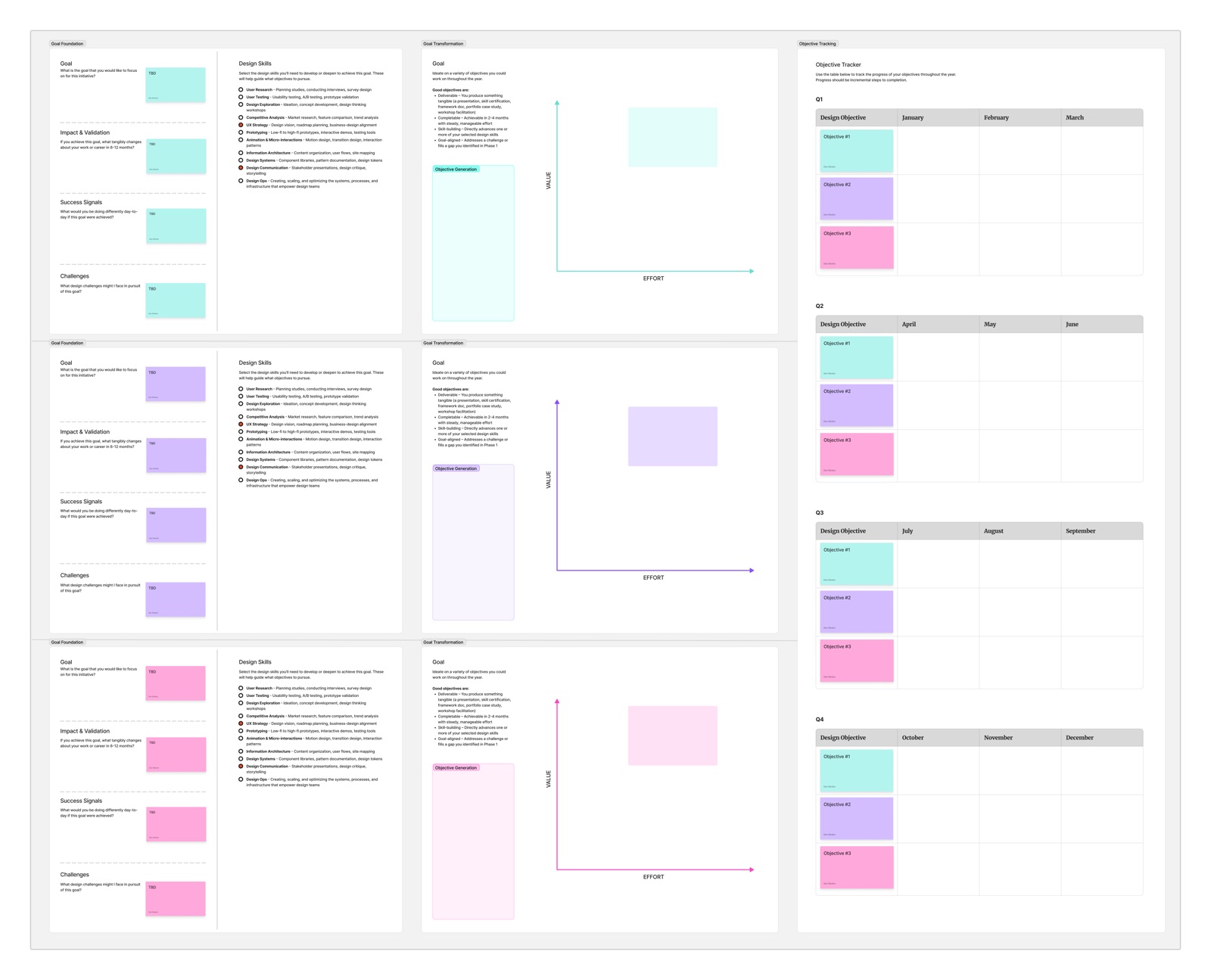
The challenge with coaching at this scale is that progress can go unnoticed. I also saw that the goals designers set for their bi-annual reviews were written at the last minute and never tracked. To address both problems, I developed a goal transformation framework: a workshop I ran with each designer to define actionable objectives, each linked to one of their three annual goals. For every objective, we identified the skill to refine or develop, built a plan to get there, and set monthly milestones. Our sessions throughout the year then became an opportunity to review progress, unblock challenges, and adjust direction as the work evolved.
The result: designers came to sessions with a shared point of reference instead of starting from scratch each time. The framework gave them ownership over their own development rather than a queue of feedback to respond to, while also creating opportunities to showcase those advances to the larger team. One designer even won first place in an external designathon that she signed up for as one of her objectives.
Practice maturity
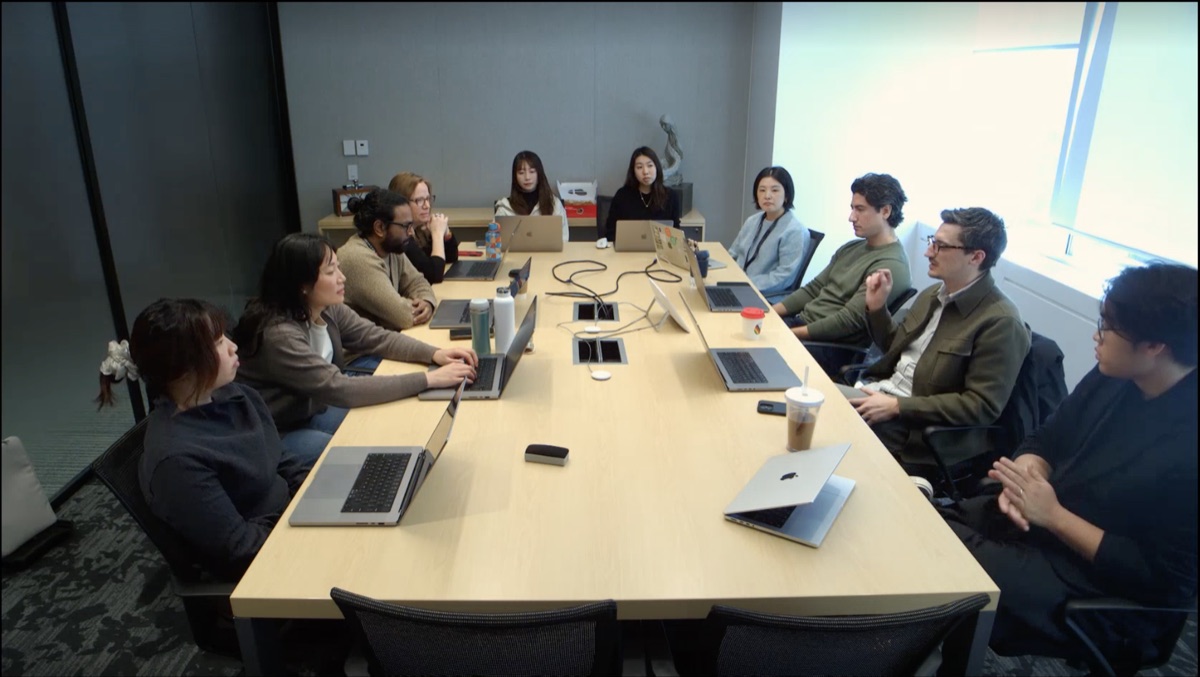
Beyond individual coaching, I was tasked with maturing Air Canada's design practice. It had worked well enough up to this point, but the team had outgrown it, and for the designers to keep advancing, the practice needed to evolve with them. Some of the core issues I identified were silos of knowledge and redundancy between design teams, a lack of standardization for design-related information and operations, and a limited focus on exposing the team to new skills and methodologies.
One of the first things I implemented was the Monthly Designers Club, where I brought in subject matter experts from my network to come and present to the Air Canada design team once a month on topics from user research to designing with AI. This low-commitment, one-hour session a month invigorated designers and got them excited about practicing and leading some of these methodologies within their teams.
I then centralized all design-related information into a Confluence-based knowledge hub where designers, no matter the team, could access or contribute to the standardization of how we conduct research, inform strategy, leverage metrics, or even train a new hire. This was the first time Air Canada had a single source of truth for their design team, and to ensure its continual success, I assigned specific designers to own certain sections of the knowledge centre.
From there, I was asked to lead the design management team in identifying and executing initiatives that would further mature the design practice. Some of these included design operation initiatives like improving the design request intake workflow, implementing a more thorough design quality assessment review, and building out an AI design workflow.
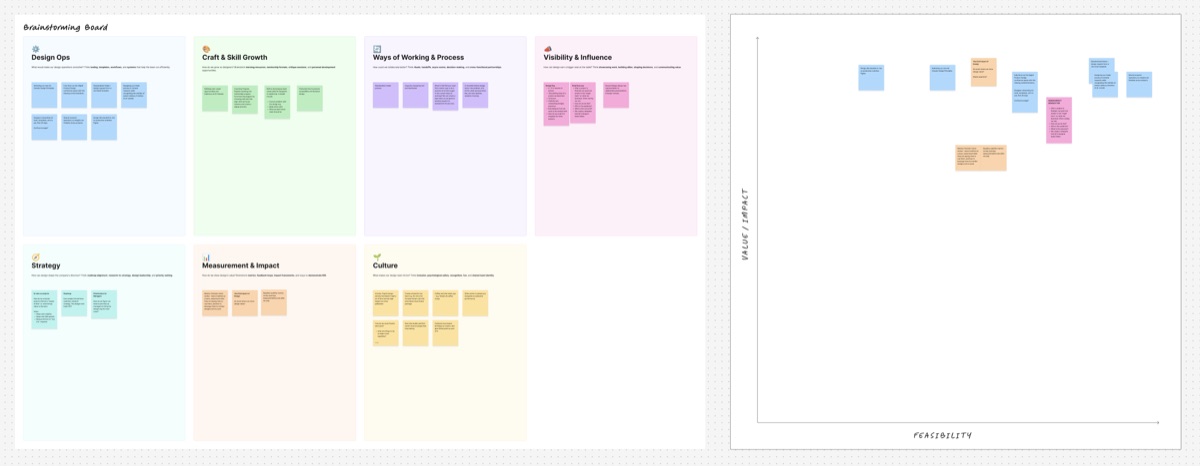
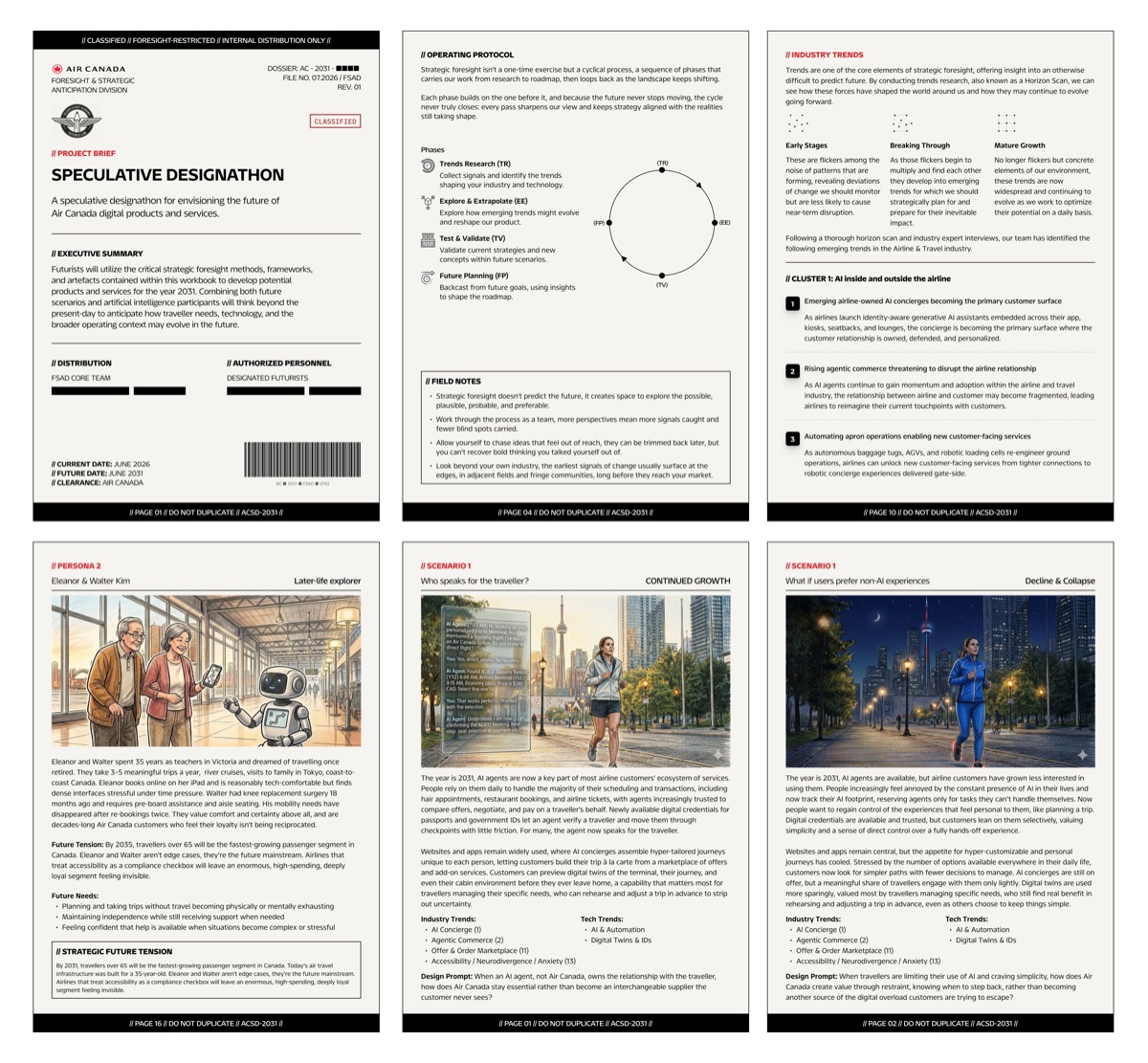
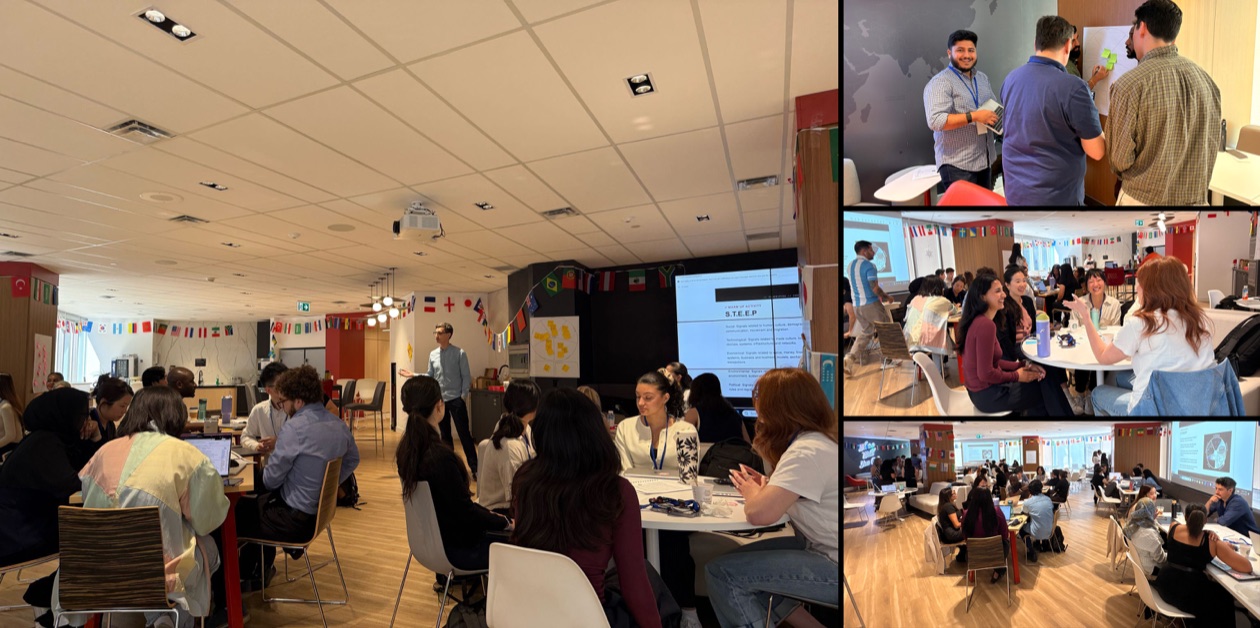
One of the more ambitious projects I led as part of the practice maturity initiative was planning and hosting a full-day Speculative Designathon for the entire product, design, and development organization. This event involved a month-long research initiative to identify emerging trends within the airline and travel industry, and to combine those with emerging technology trends I had earlier documented in my annual trends report to develop future scenarios. The goal of this event was to tackle a larger problem with the digital product team, which is that they had become so focused on small incremental changes that they lacked a shared vision of the future to build their roadmap toward.
I assigned each group an equal mix of product managers, designers, and developers. Every group received a future scenario, the trends driving it, and an evolved version of one of our personas. Their task was to design a new experience that might exist on Air Canada's platform five years from now, 2031, using AI to rapidly prototype their concept before presenting to a panel of executive judges. The event was so successful that we will be hosting a similar future-looking event for each year-end to influence the following year's product roadmap.
Impact
On the product design side, the design system that was once sitting unadopted outside the homepage is being actively used across the core flows within booking, shopping, and management. New potential components go through an overall fit check before being implemented in the design system to avoid single-focused components from causing designers to detach and build custom components on a daily basis.
On the coaching and practice side, the changes were more structural. The twelve designers I coach now work from goal frameworks they own and track throughout the year rather than writing objectives that they quickly forget about. The coaching program is now evolving to include all the designers within the practice, in addition to identifying new coaches to join the program on its mentorship side. The knowledge hub gave Air Canada its first single source of truth for design, with designers responsible for maintaining it, and the Monthly Designers Club continues to expose the team to methodologies they are now leading themselves. The Speculative Designathon shifted the organization's short-term perspective to a shared vision of the future, and it is now becoming an annual event that feeds directly into the product roadmap.
The client recognized both as meaningful outcomes. But the outcome I value most is the one I set out to achieve at the start of the engagement: the team is not dependent on me for any of it. The systems, the frameworks, and the practices all have owners inside Air Canada, which means the work keeps improving long after my engagement ends.